Chinese Pronunciation : Pinyin is Not English
Originally published
Pinyin is a valuable starting point for learning Chinese. It lets you connect a written spelling with a Mandarin pronunciation before you can read many characters.
The difficulty is that pinyin looks like English. Some spellings may remind you of familiar sounds, while others work differently. Treat it as a system for Mandarin, rather than reading each letter by an English rule.
For example, Mandarin pinyin b is an unaspirated stop; it is not a promise of an identical English b sound. Pinyin c represents an aspirated “ts” sound, rather than the usual English readings of c. Letter comparisons are approximations, so listen to the Mandarin syllable as well as reading its spelling.
A familiar-looking spelling can lead you astray. 很 hěn should not be pronounced as the English word hen, meaning a female chicken. The Mandarin vowel and tone need their own model.
Use a reliable recording when you meet a word in pinyin. Listen, repeat and compare the complete syllable, including its tone. A dictionary with recorded pronunciation can help. Check the actual voice and word rather than assuming that every recording or every synthesized voice has the same quality.
If you are at an early stage, give the system deliberate attention instead of racing through a textbook's opening chapter. Work on distinctions such as j and ch, and u and ü, with suitable explanations and recordings.
In the original article I recommended a course with recordings and explanations of how to make the sounds, and linked my Sensible Chinese Pinyin Course. That archived course page remains a reference; a historical mention of free access does not confirm that every former service is available today.
If possible, practise with a Mandarin speaker or language partner who can respond to your pronunciation. The original article also mentioned finding a teacher through iTalki. Current availability and prices depend on that separate service; no purchase is needed to read this guide.
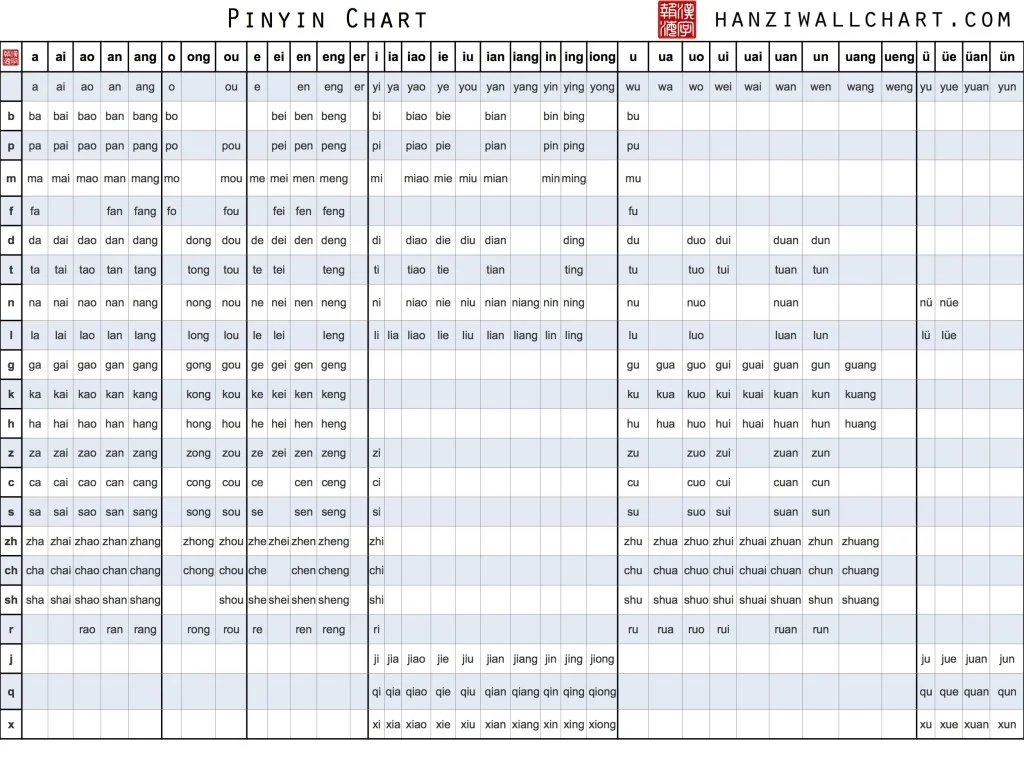
The archived pinyin chart is another starting point. Listen to a syllable, repeat it, ask what differs and try again. Feedback helps you notice a mismatch that you may not hear yourself. It is a useful practice loop, not a guarantee or the only possible way to learn.
I also linked the historical Speak Chinese Today eBook to explain why I valued speaking practice and feedback. These are historical resources; check the linked page for what remains accessible.
Originally published June 4, 2015. Phonetic wording and historical-service caveats reviewed November 3, 2026. The Columbia Asia for Educators romanization table distinguishes unaspirated b and aspirated c; its English sound comparisons are approximate.